Novak Djokovic Reflects on Lack of Fan Support Compared to Federer and Nadal: “I Was the Unexpected Challenger, and That Bothered Some People”

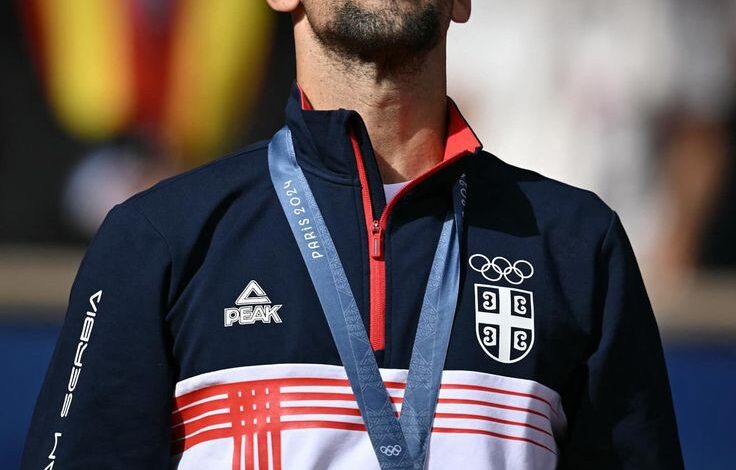
Novak Djokovic Reflects on Lack of Fan Support Compared to Federer and Nadal: “I Was the Unexpected Challenger, and That Bothered Some People”
In the world of tennis, greatness is often defined not just by the number of titles won but by the emotional connection forged with fans. While Novak Djokovic has, by most metrics, built one of the greatest careers the sport has ever witnessed, he has often stood in the shadow of two iconic figures — Roger Federer and Rafael Nadal — when it comes to public affection. Recently, Djokovic opened up about this enduring disparity, shedding light on how it has impacted him personally and professionally.
> “I was never as loved as Federer and Nadal because I wasn’t supposed to be there,” Djokovic candidly stated. “I was the little guy, the third guy who came and said, ‘I’m going to be No. 1.’ Many people didn’t like that.”
These words offer rare vulnerability from a man whose career has often been marked by resilience, self-belief, and a relentless pursuit of excellence. Djokovic’s reflection is more than just a lament; it is a profound insight into how narratives are formed in sport — and how they sometimes exclude those who disrupt the expected order.
—
The Uninvited Rival
When Djokovic burst onto the tennis scene in the mid-2000s, Federer and Nadal had already cemented themselves as tennis royalty. Federer, with his effortless grace and poised demeanor, was beloved globally. Nadal, fierce yet humble, earned admiration through grit and sportsmanship. Theirs was a rivalry celebrated not just for the tennis, but for the storybook contrast of styles and personalities.
Enter Djokovic — brash, confident, defiant. He didn’t fit the mold. He wasn’t the aristocrat like Federer or the gladiator like Nadal. He was the outsider, the disruptor, the man from Serbia who dared to believe he could beat them both at their peak. And eventually, he did.
Yet, instead of being fully embraced for his achievements, Djokovic often found himself facing boos from crowds, skeptical media narratives, and divided opinions. Even as he equaled — and eventually surpassed — Federer and Nadal in Grand Slam titles, questions persisted: Why doesn’t he command the same love?
—
Statistics vs. Sentiment
On paper, Djokovic’s resume is virtually unmatched. As of 2025:
24 Grand Slam titles
Record weeks at World No. 1
Double Career Grand Slam (winning each Slam at least twice)
Winning records against both Federer and Nadal
These are not just great numbers; they are historic. And yet, in moments when crowd sentiment could have lifted him, Djokovic often faced the opposite. Wimbledon finals, US Open clashes — time and again, he found himself fighting not just an opponent, but a stadium.
Djokovic’s recent comments indicate that this wasn’t lost on him. “It hurt,” he admitted. “You feel it — the lack of support. You try to focus on the match, but you’re human.”
—
Reasons Behind the Disparity
Sports psychologists and cultural commentators have long examined the “Djokovic dilemma.” Several reasons are often cited:
1. Timing: Federer and Nadal came first, allowing fans to emotionally invest in their rivalry. Djokovic’s entry upset a beloved duopoly.
2. Persona: Djokovic’s on-court intensity and early career antics (such as mimicking other players) sometimes rubbed fans the wrong way.
3. Geopolitics: Being from Serbia — a nation with a complex international image — Djokovic lacked the media polish that Federer (Swiss) and Nadal (Spanish) enjoyed.
4. Authenticity vs. Image: While Federer and Nadal are often stoic and diplomatic, Djokovic wears his emotions on his sleeve. To some, this is refreshing; to others, it’s polarizing.
—
Redefining the Narrative
Despite the challenges, Djokovic has remained unapologetically himself. Over the years, he has matured publicly, become an advocate for player welfare, and taken up causes beyond tennis. His resilience has earned him grudging respect even from former critics.
And slowly, things are changing.
Younger generations, less entrenched in the Federer-Nadal era, view Djokovic through a different lens — as the ultimate example of perseverance and adaptability. He has built a fan base not through inherited affection, but through sheer excellence and defiance.
—
A Legacy Beyond Applause
Djokovic’s reflections offer a rare look into the emotional cost of greatness. To become the best, he had to challenge not just legends, but the stories people wanted to believe. He wasn’t the prince or the warrior — he was the contender who wouldn’t go away.
In an era that idolized Federer’s poetry and Nadal’s grit, Djokovic was the prose — less romantic, but no less masterful. He didn’t play to please, he played to win. And in doing so, he has written one of the most compelling chapters in tennis history.
> “You don’t always get to choose how you’re loved,” Djokovic said, “but you can choose how you play. And I chose to play for greatness.”