Cracks More Obvious in Djokovic’s Game as He Strives to Remain at Summit

Cracks More Obvious in Djokovic’s Game as He Strives to Remain at Summit
Novak Djokovic has long been synonymous with dominance in men’s tennis. With 22 Grand Slam titles and an unparalleled ability to rebound from tough situations, the Serbian legend has set a standard few can reach. However, as he continues his quest to remain at the pinnacle of the sport, cracks have become more visible in his game, offering a glimpse into the challenges he faces in an ever-evolving tennis landscape.
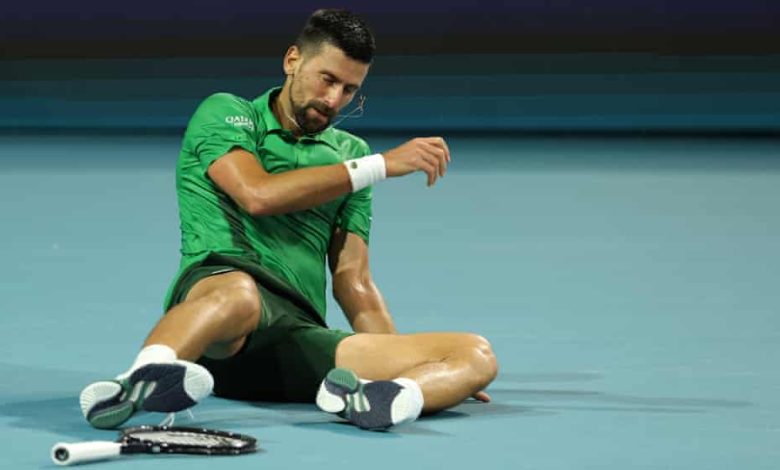
In recent months, Djokovic has shown signs of vulnerability that were rarely seen during his prime. Injuries, particularly to his elbow and shoulder, have forced him to adapt his playing style, and his fitness level, once a hallmark of his success, now appears to require extra care. These physical limitations have led to moments of inconsistency, something Djokovic himself has acknowledged as he struggles to maintain the same level of intensity that propelled him to the top for so long.
One of the most noticeable aspects of his game is a slight dip in his movement. While still one of the fastest and most agile players on the tour, Djokovic has admitted that his recovery speed is not what it used to be. This has been especially apparent on slower surfaces, where his famous flexibility and agility, once essential to his defensive play, appear to be less effective. His opponents, such as younger stars like Carlos Alcaraz and Daniil Medvedev, are exploiting these minor lapses in speed, forcing Djokovic to play more aggressively and take greater risks.
Moreover, Djokovic’s serve, often one of the most reliable in tennis, has shown signs of wear. A series of double faults, especially in high-pressure situations, have crept into his matches, an anomaly in a player who used to thrive under pressure. This weakness has been exploited by his rivals, who are capitalizing on his inability to consistently hit his first serves in crucial moments.
Despite these challenges, Djokovic remains a fierce competitor and has demonstrated resilience in his pursuit to stay on top. He has continuously adapted his game, incorporating new strategies to counteract his physical limitations. His renowned mental fortitude and ability to recalibrate in the face of adversity mean that he is not easily ruled out in any tournament. However, the competition at the top has never been fiercer, with a new generation of players pushing him harder than ever before.
At 36, Djokovic is experiencing what every great champion eventually faces: the realization that time is a formidable opponent. While his skills and experience allow him to remain a threat, the cracks in his game are becoming harder to ignore. As he continues his fight to defend his position at the summit of the ATP rankings, the question remains: can Djokovic continue to reinvent himself and fend off the challenges of the rising stars, or will the demands of longevity eventually take their toll on the one-time invincible champion?