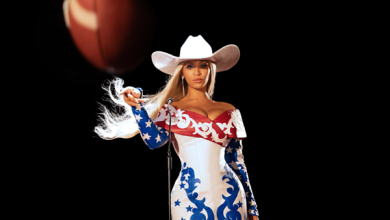
Country Crossover Kings: How Beyoncé and Post Malone Are Redefining the Sound of Country Music_


When Recording Academy announced its nominations for the 2025 Grammy Awards last week, the country music category included some Texans who aren’t exactly traditional entrants in the category.
“F-1 Trillion” by Post Malone and “Cowboy Carter” by Beyoncé were both nominated for Best Country Album. Kacey Musgraves, another Texan, was also nominated in the category for “Deeper Well,” an album many critics identified as folk-forward.
According to Marcus Dowling, however, these records are wholly representative of mainstream country in 2024. Dowling covers the country music industry from Nashville as a reporter for The Tennessean.
He spoke to the Texas Standard about country’s long tradition of genre bending. Listen to the interview above or read the transcript below.
This transcript has been edited lightly for clarity:
Texas Standard: Why do you think country’s an attractive category for musicians to dip their toes into – and why now, do you think?
Marcus Dowling: Well, I think you said the magic word. It’s musicians. There’s a level of creative freedom that people who are unaware of Nashville’s 100-year tradition of being welcoming to the singer-songwriter community are unaware of.
But once they get here, they understand that there are world class musicians and world class songwriters who literally are falling out of the trees, for lack of a better term. And you’re able to engage with them fairly frequently and the level of material, because Nashville is always hungry for a hit, is peerless.
You know, you talk about those open arms that a lot of folks in country have these days for people from different genres. And I’m thinking back when Taylor Swift went pop. And the country music world sort of seemed to be rather upset.
I seem to remember a full page ad taken out by the Country Music Association sort of saying, “Well, thanks for the ride, Taylor. We wish you success in your new career as a pop artist.” And it seemed very much like they were closing the doors on her. You remember that?
Absolutely. And I think that there’s something fascinating about generational reckonings with history and evolution, that country music, because it’s a 100-year ]-old genre again, they have an issue with attempting to understand how quickly things change now.
So that’s something that has actually changed within the last half decade here in Nashville – the sense that you have to be quick or you’re lost in the larger pop conversation – which, you know, given that country has a larger part to play in that – country clearly wants to always be a part of what is happening in the broader conversation that they have an unprecedented reach into these days.
You know, I don’t mean to be dismissive at all because these are some great artists who’ve been nominated here. But at the same time, I think a lot of people sort of see it pretty easy to throw a cowboy hat on and call yourself country – especially as we’ve seen the metamorphosis of country music move more into pop categories.
In fact, a lot of people very strongly believe that classic rock has now become sort of the modern country sound in some regions of the U.S. So I’m wondering what you have to say about that.
First and foremost, I’d say that there are members of Lynyrd Skynyrd and ZZ Top who would be happy to agree that country music and rock and roll have been bedfellows for the better part of five decades.
Secondarily, I’d say that the culture of country music or the culture that country music has fostered, especially when you look at the literal billions of dollars of bars that exist on Lower Broadway in downtown Nashville, has created something that is rather sustainable for people who are aspiring artists of the younger generation or want to reach into as well.
If you look at artists from Charley Crockett to Zach Top, from the Red Clay Strays to, gosh, anything that I think ERNEST is making, you have this breadth of understanding of what classic country means as well. And there’s a country as a culture and there was country as a music operating in this kind of uneven synergy.
That’s an imbalance at present. But I’m expecting that within the next couple of years here that you’re going to see something emerge that is a middle ground between the two. But at present, we do not have that middle ground, certainly.