Dunblane Unveils Emotional 9-Foot Statue of Sir Andy Murray — A Monument to Courage, Loss, and the Power of Dreams

Dunblane Unveils Emotional 9-Foot Statue of Sir Andy Murray — A Monument to Courage, Loss, and the Power of Dreams
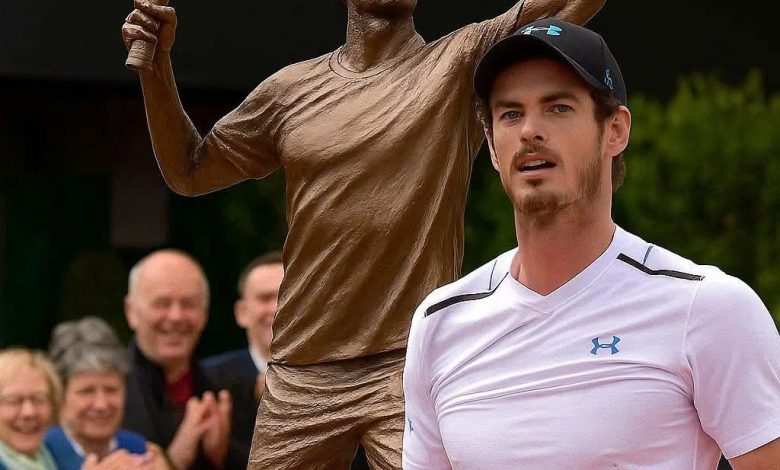
Under a low, slate-grey Scottish sky that seemed to press gently upon the rolling hills, Dunblane gathered to honour the greatest athlete the town has ever produced — not with medals, banners, or roaring stadiums, but with something far more eternal. In the very square where a three-year-old Andy Murray first clutched a tennis racket, a soaring 9-foot bronze statue was unveiled, capturing the moment that defined not only a career, but a nation.
The sculpture freezes a scene etched into British sporting history: Murray on his knees at Wimbledon in 2013, tears falling freely as he clutched the trophy that had eluded Britain for 77 years. His eyes — even in bronze — are lifted to the players’ box, where his mother Judy wept with pride. At the statue’s base, three simple lines are carved into the plinth, heavy with meaning and memory:
“To the boy who survived Dunblane.
To the man who refused to quit.
From a town that never forgot.”
A Town Turns Out for Its Own
Nearly 7,000 people — almost the whole population of Dunblane — filled the town centre. Some came wrapped in tartan scarves, some in the bright blue kits of the Dunblane Sports Club, where young Andy first learned to serve, sprint, and fight. Many held handwritten signs. Many simply held each other.
Hundreds of children, dressed in matching club outfits, fell silent as Sir Andy Murray stepped forward to speak. The tennis knight, weathered by triumphs and surgeries, looked out at the faces that had shaped him, supported him, and protected him through the light and the darkness.
“I was the wee skinny lad teachers said would never make it,” he began, his voice cracking before he steadied it. “This statue isn’t for the two Wimbledons or Olympic golds. It’s for every child who’s been laughed at for dreaming too big. Look up at it and remember: Dunblane produces fighters.”
The applause rolled across the square like thunder.
A Moment for the Ages
When the speeches ended and the bagpipes faded, a ten-year-old girl stepped forward, hands trembling as she offered Murray a single yellow tennis ball. On it, in careful black lettering, were the words:
“Thank you for showing us we can.”
Murray knelt to her level, signed the ball, and — in a gesture that stunned the sculptor and crowd alike — placed it gently into the bronze hand of his Wimbledon likeness.
“Now he’ll never play alone again,” he whispered.
Parents wiped tears. Children stared up at the statue as if looking at a superhero. And in a sense, they were.
A Symbol That Goes Beyond Sport
Already, one part of the monument gleams more brightly than the rest: the left hip — the hip Murray had replaced twice during his career, the one that nearly ended everything. Thousands of hands have touched it since the statue’s construction began, leaving a soft golden sheen where bronze has been polished by hope.
Locals say they plan to keep touching it, not for luck, but for strength.
Because Dunblane remembers.
Because Andy Murray remembers.
Because this statue stands not only for wins, but for survival.
Not only for talent, but for tenacity.
Not only for greatness, but for every child who has ever felt small.
As the crowds slowly dispersed and the clouds rolled on, one truth remained in the square like a heartbeat:
Dunblane’s newest landmark is not just bronze —
it is a story cast in metal, a reminder that resilience can rise from the darkest of places, and an eternal call for generations to never stop dreaming.